Manual Lymphatic Drainage is a specific clinical technique that uses very light, directional pressure to move lymph fluid toward lymph nodes that are still working. It looks gentle because it has to be. The vessels that carry lymph sit just under the skin and they are thin walled. Press too hard and you flatten the very channels you are trying to move fluid through.
This is the part most people get wrong when they book a “lymphatic massage” somewhere. A deep relaxation massage does not move lymph. After surgery it can set you back.
Why the pressure is so light
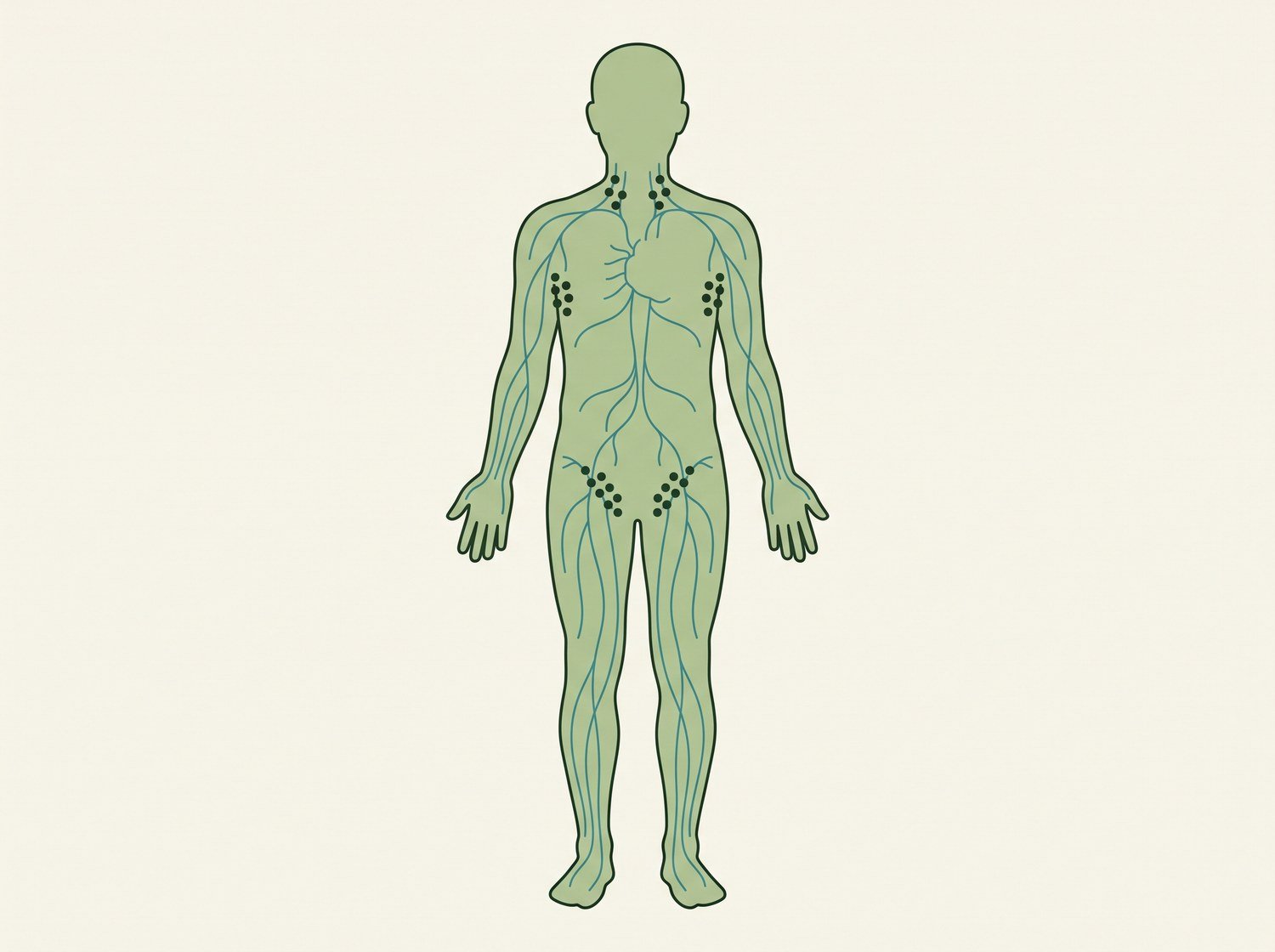
The superficial lymphatic vessels lie roughly a few millimetres below the skin surface. They have one-way valves and a slow, rhythmic pumping action of their own. The technique works by stretching the skin in the direction of drainage, which stimulates that pumping and opens the initial lymphatics so fluid can enter them.
Deep pressure does the opposite. It compresses the superficial system and pushes into muscle, where the lymphatic vessels you need are not.
The sequence matters as much as the pressure. Treatment for a swollen leg often begins at the neck and abdomen, nowhere near the swelling. You are clearing the route before you move anything into it. Starting at the ankle and pushing upward into a congested system is how people end up more uncomfortable than when they arrived.
The Vodder method
Karthik trained in Manual Lymph Drainage and Combined Decongestive Therapy through Dr. Vodder School International, the school founded on the work of Emil and Estrid Vodder, who developed the technique in the 1930s. It remains the reference standard for this work. It is a structured training, not a weekend add-on to a massage certificate.

Who this is for
- Post-surgical recovery after liposuction, tummy tuck, BBL and other cosmetic surgery
- Swelling after orthopaedic surgery
- Lymphedema, primary or secondary, including after cancer treatment
- Lipedema
- Chronic fluid retention and heaviness in the limbs
- Post-injury swelling that is not settling
What a session involves
An assessment comes first, including limb measurement where there is swelling, so there is a number to compare against later rather than an impression. Then the treatment itself, typically 45 to 60 minutes.
You stay covered apart from the area being worked on. There is no oil, because the technique needs skin contact rather than glide. Most people find it strange at first because it is so much lighter than any massage they have had.
Where it helps, we add compression bandaging or fit you for a garment, and show you a short home routine. Self-drainage between sessions is often what decides whether the result holds.
After surgery, timing matters
Your surgeon sets the timeline and we work inside it. Many patients are cleared to start within the first week or two after cosmetic surgery. Bring your post-operative instructions to the first appointment.
Early drainage is aimed at swelling and comfort. Later, it also targets fibrosis, the firm irregular areas that can develop as tissue heals. Fibrosis responds better to consistent work started early than to intensive work started late, which is the main reason we would rather see you sooner.

What it does not do
It does not detoxify the body. The liver and kidneys do that. It does not burn fat, cause weight loss, or reshape you. It does not cure lymphedema.
If your swelling turns out to be venous, cardiac, kidney related or a side effect of medication, drainage is the wrong tool. We will tell you that at the assessment and point you toward the right one rather than sell you a course of treatment.
When it is not safe
Manual lymphatic drainage is not appropriate for everyone. We screen for this at the assessment. Tell us if any of the following apply to you.
None of these is automatically a permanent no. Several simply mean treatment waits, or that we work with your medical team first.
- An active infection in the area, particularly cellulitis, which needs antibiotics first
- Untreated or unstable heart failure
- A known or suspected blood clot, including deep vein thrombosis
- Active, untreated cancer, unless your oncology team has advised that treatment is appropriate
- Acute kidney problems
What to bring
Your post-operative instructions if you have had surgery, any compression garment you already own even if it does not fit well, and a list of your current medication. If another clinician has measured the limb, bring those numbers.