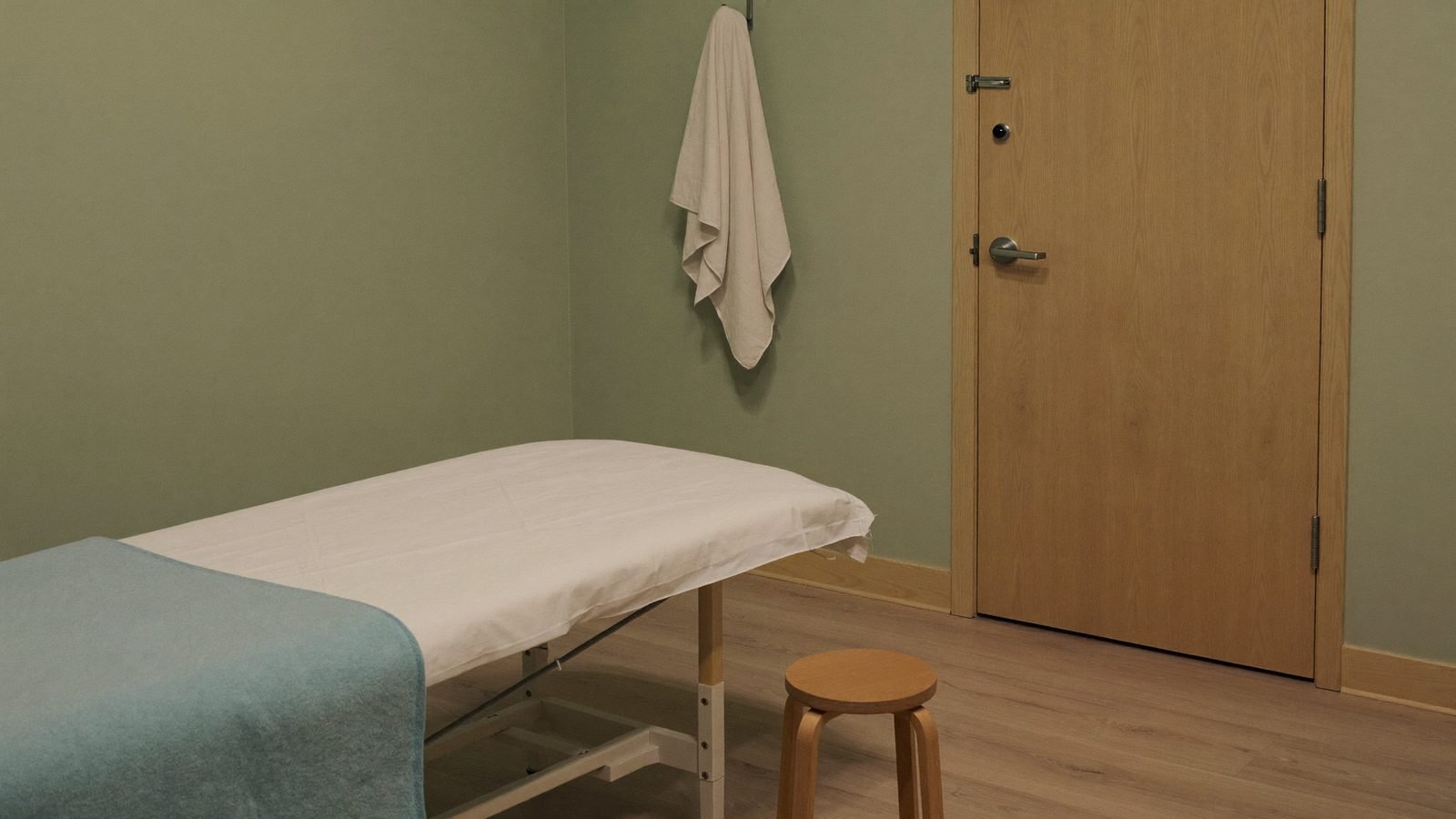
Pelvic floor physiotherapy assesses and treats the muscles that support the bladder, bowel and pelvic organs. It is used for incontinence, pelvic pain, pregnancy-related pain, postpartum recovery and prolapse symptoms. We provide it in a private room in St. Albert.
These problems are extremely common and badly under-treated, mostly because people do not want to raise them. Leaking when you cough or run, pain with intercourse, a feeling of heaviness or pressure, or a core that has never felt right since giving birth are all things we treat every week.
What we treat
Urinary incontinence, including leaking with coughing, sneezing, exercise or sudden urgency. Pelvic organ prolapse and the pressure or dragging sensation that comes with it. Pelvic pain, including pain with intercourse. Pregnancy-related pelvic girdle and low back pain. Postpartum recovery, including abdominal separation (diastasis recti). Core and pelvic stability after a vaginal birth or a C-section.

How the appointment works
A private room, a full explanation before anything happens, and your consent at every step.
The first visit is mostly conversation and external assessment. We take a history, look at how you breathe, how you move, and how your abdomen and pelvis behave under load. None of that requires anything invasive.
You can stop at any point, for any reason, without explaining yourself.

Internal assessment, and your choice about it
Internal assessment is often the most informative tool available, because it is the only way to directly assess how the pelvic floor muscles contract, relax and coordinate. It is always your choice.
If you would rather not, say so. There is a great deal we can assess and treat externally, and plenty of people make good progress without ever having an internal assessment. Declining does not put you in a lesser category of patient.
If you do consent, it is explained fully first, it is done with a glove and lubricant, and it stops the moment you say stop.

Why it is not just Kegels
This is the part that surprises people most.
A pelvic floor that is too tight causes as many problems as one that is too weak. Tight muscles are also weak muscles, because a muscle held short cannot generate force well. Someone with pelvic pain and an overactive floor who is diligently doing a hundred squeezes a day is frequently making themselves worse.
That is why assessment comes before exercise. Handing every patient the same squeeze programme is how pelvic health got its reputation for not working.

Pregnancy and postpartum
During pregnancy we treat pelvic girdle pain, low back pain and the bladder changes that come with a growing uterus, and we prepare you for delivery and recovery.
Afterwards, the common assumption is that you wait six weeks, get cleared, and resume normal life. In practice that check confirms healing, not readiness for load. Plenty of people are cleared and still cannot run, lift their toddler, or sneeze safely. That gap is exactly what this treatment is for, and it is worth addressing whether you gave birth six weeks ago or six years ago.