Lymphedema is long-term swelling caused by a lymphatic system that cannot clear fluid as fast as it arrives. It is a chronic condition rather than a one-off problem. Managed properly it usually stays controlled. Left alone it tends to progress, and the tissue changes become harder to reverse.
Primary and secondary
Primary lymphedema comes from a lymphatic system that has not formed or functioned properly. It can appear in infancy, at puberty, or later in adult life with no obvious trigger.
Secondary lymphedema is far more common. Something damages a system that was working: surgery involving lymph nodes, radiotherapy, infection, injury, or long-standing venous disease. In Canada, cancer treatment is the most familiar cause, but it is not the only one.
The stages, and why yours matters
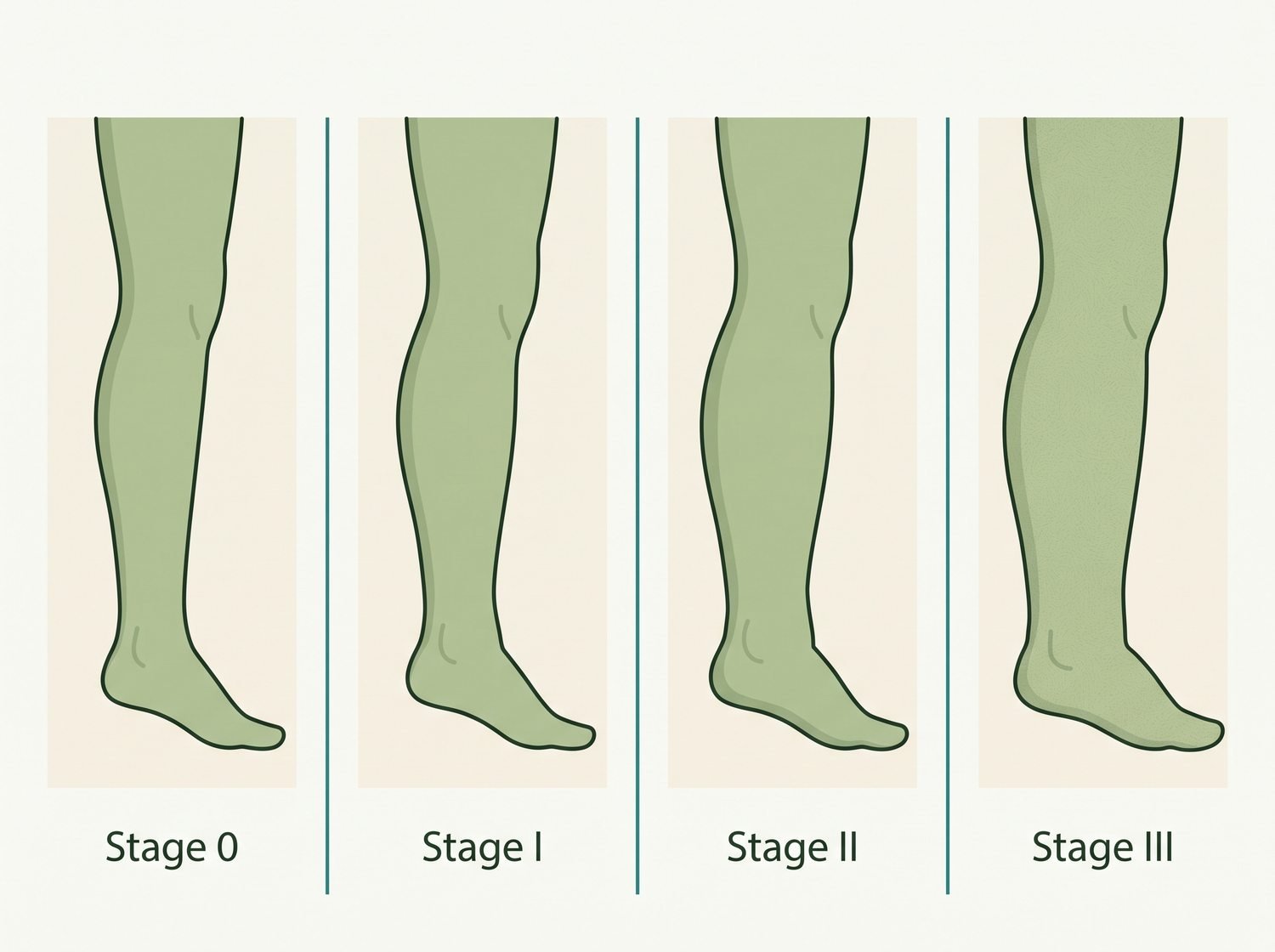
The International Society of Lymphology describes four stages. They are not a scoreboard. They tell us what treatment is realistically aiming at.
- Stage 0. The lymphatic system is impaired but there is no visible swelling yet. There may be heaviness or a feeling of fullness. This is the best possible point to start.
- Stage I. Swelling that reduces with elevation, and the tissue still pits when pressed.
- Stage II. Swelling that no longer resolves with elevation. Tissue begins to firm up as fibrosis develops.
- Stage III. Established tissue change, with skin thickening and increased limb volume.
Earlier stages respond faster and need less to hold. That is the honest argument for being assessed when the limb only feels heavy, rather than waiting until it looks obviously swollen.
Complete Decongestive Therapy
CDT is the standard of care and it has four parts. We use all four, because doing one or two of them is why treatment often fails.
People sometimes ask which part matters most. Compression usually does the heaviest lifting for holding a reduction. Drainage without compression tends to be undone by the time you get home.
- Manual Lymphatic Drainage to move fluid toward working nodes
- Compression, bandaging first and then a fitted garment
- Movement and exercise prescribed for your stage
- Skin care, because infection is the main risk with lymphedema

Two phases, and the second one is yours
The intensive phase brings the swelling down. Treatment is frequent, bandaging is often daily, and it runs for a defined block rather than indefinitely.
The maintenance phase keeps it down. This is the long part, and most of it is run by you: your garment, your skin care, your movement, your self-drainage. We teach the routine and review it. A plan you will not actually follow is not a plan, so we would rather build a smaller one you keep.

Measured, not guessed
We measure the limb at set points and record the numbers. You do not have to trust anyone’s impression of whether it looks better. If the measurements are not moving, the plan changes or we refer on.
Compression garments, and funding in Alberta
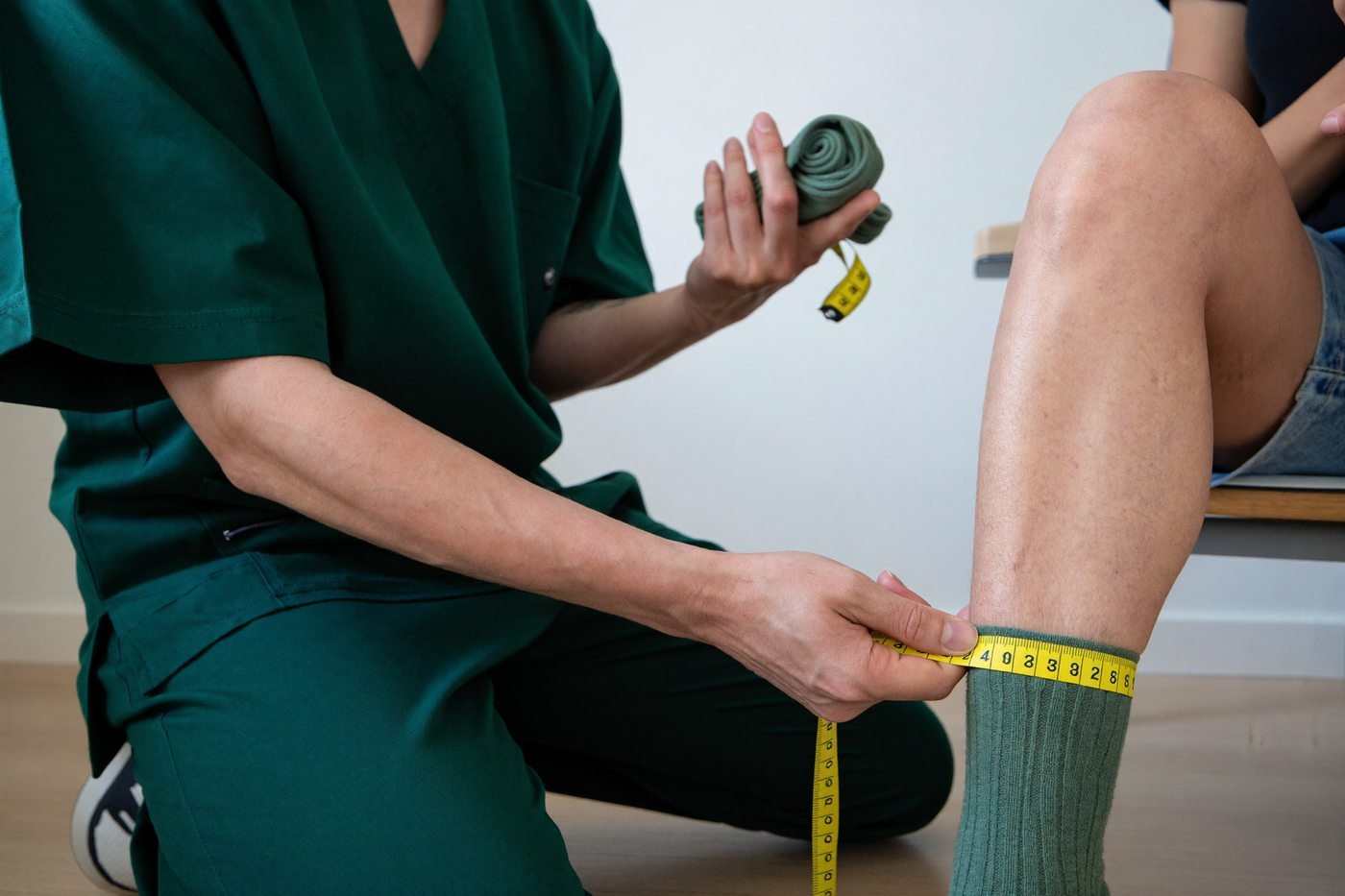
A garment has to match the limb, the stage and what you actually do all day. Circular-knit and flat-knit garments behave differently, and the wrong compression class can be uncomfortable enough that it lives in a drawer, which helps nobody.
Alberta Aids to Daily Living operates a programme that may help with the cost of compression garments for eligible patients. Eligibility criteria, garment categories and authorisation requirements change over time, so confirm the current rules with AADL or your prescribing clinician rather than relying on any clinic website, including this one.

Infection is the risk to take seriously
A limb with lymphedema is more prone to cellulitis, and cellulitis can worsen the lymphedema, which then makes further infection more likely. Break that loop early.
Seek medical attention promptly if you notice a spreading red area, heat, a sudden increase in swelling, pain, or you feel feverish or unwell. This is a same-day medical problem, not something to raise at your next physiotherapy appointment. Treatment with us pauses until an infection is being managed.

What we will not tell you
That it can be cured. It cannot. Any clinic promising a cure is misleading you, and under the advertising standards Alberta clinicians work to, they should not be doing it.
What we will say is that well-controlled lymphedema is a very different life from uncontrolled lymphedema, and that the gap between the two is mostly consistency.