St Albert Physio & Lymphatic Centre St Albert Physio & Lymphatic Centre Book now
Home

Services

Physiotherapy Lymphatic Drainage Lymphedema Treatment Lipedema Care Pelvic Floor Physiotherapy Sports Injury Physiotherapy Motor Vehicle Accident WCB Physiotherapy

Clinic

Team Health Blog Contact Book an appointment

Home / Lipedema Care in St. Albert

Lipedema Care in St. Albert

Illustration of the symmetrical lipedema pattern, with both legs enlarged and the ankles spared
VodderTrained in MLD and CDT
1:1Your clinician, whole visit
No referralNeeded to book
St. AlbertOn St Albert Trail

Lipedema is a chronic condition in which fat is distributed abnormally, almost always symmetrically, usually through the legs and often the arms. It is frequently mistaken for obesity or for ordinary lymphedema, and many people are told for years that they simply need to lose weight. It is not caused by overeating and it does not respond to dieting the way ordinary fat does.

What it typically looks like

The ankle cuff is the detail that most often settles it. Ordinary weight gain does not stop neatly at the ankle.

  • Symmetrical enlargement of both legs, and often the arms
  • The feet and hands are usually spared, so there is a visible cuff at the ankle or wrist
  • Tenderness, and bruising from knocks you barely noticed
  • A disproportionate lower body compared with the upper body
  • Little change in the affected areas from weight loss, even when the rest of the body changes

How it differs from lymphedema

Lipedema is usually symmetrical, affects both limbs, spares the feet, and is characteristically tender. Lymphedema is more often one limb, does involve the foot, and is not typically painful to light pressure in the same way.

They are not mutually exclusive. Long-standing lipedema can overload the lymphatic system and produce a secondary lymphedema on top of it, sometimes called lipo-lymphedema. That combination changes the treatment plan, which is a practical reason to be assessed properly rather than self-diagnosing from photographs online.
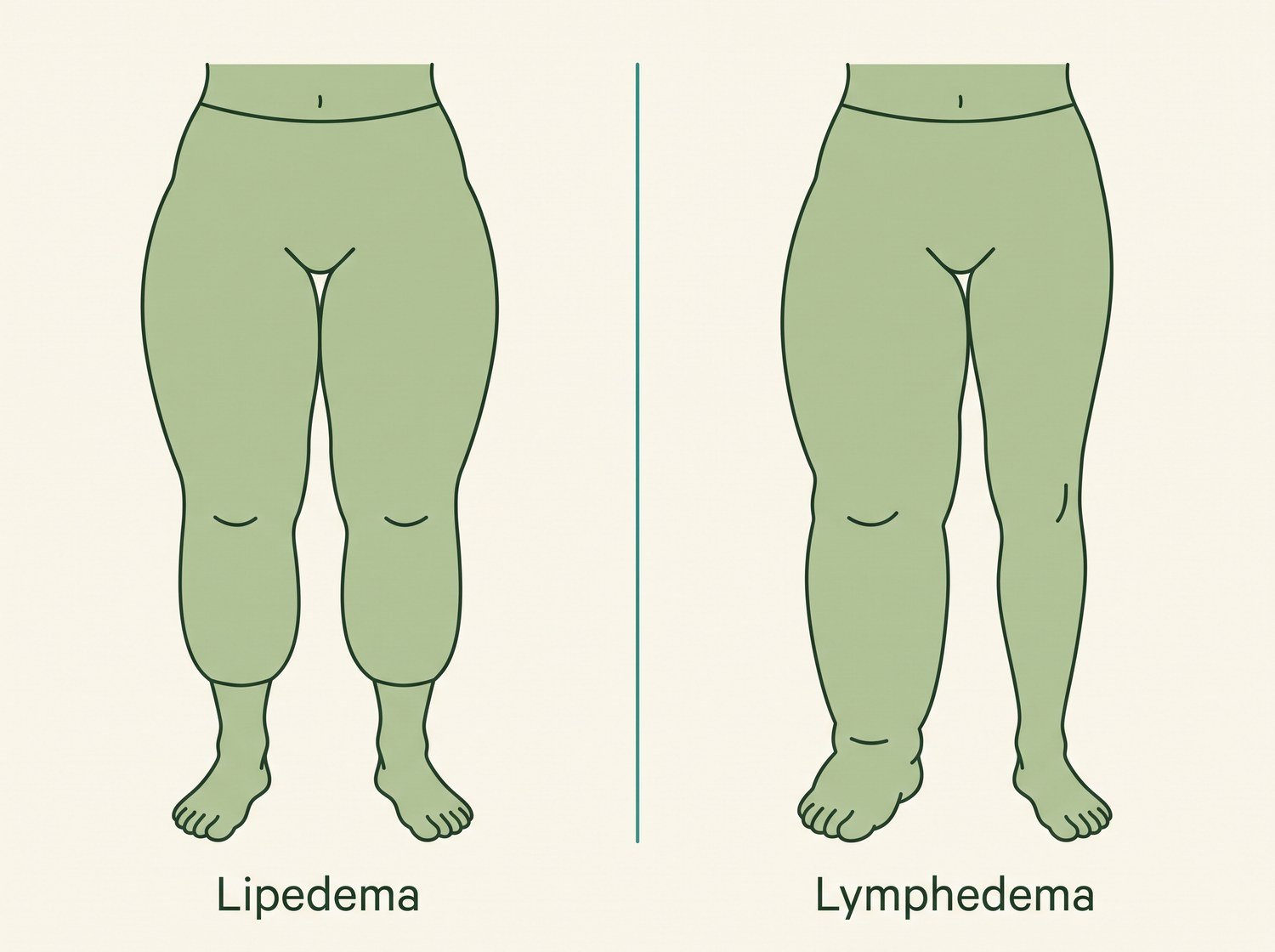
Two-panel illustration comparing lipedema, symmetrical in both legs with the feet spared, against lymphedema, which affects one limb and involves the foot
Lipedema is symmetrical and spares the feet. Lymphedema usually is not. Educational illustration, not a diagnostic tool

Why it gets missed

Lipedema affects women far more often than men, frequently appears or worsens around puberty, pregnancy or menopause, and does not show up on routine bloodwork or a scale. A BMI reading tells you nothing useful about it.

The result is a pattern we hear constantly: years of diets that changed the waist and never the legs, and being told to try harder.

Going through what is actually happening, which is usually where it gets missed

What treatment can and cannot do

We cannot cure lipedema and we will not tell you otherwise. Treatment is not a fat-reduction procedure.

What it does target is real: pain and tenderness, heaviness, any fluid component sitting on top of the condition, mobility, and protecting the limb from developing secondary lymphedema.

  • Gentle manual lymphatic drainage where there is a fluid component
  • Compression fitted for lipedema specifically, since flat-knit garments usually suit the tissue better than standard circular-knit
  • Movement that the condition tolerates, with low-impact and water-based work often better tolerated
  • Skin care to reduce infection risk where the lymphatic system is already under load
A realistic account of what treatment changes, and what it does not

Being believed

Most people arrive having been dismissed somewhere else, often repeatedly, sometimes for a decade. The assessment starts by taking the symptoms seriously.

You will get a straight account of what we think is going on, what we can help with, and who else you may need to see. If what you have is not lipedema, we will say that too.

Compression fitted to a measurement, so the problem stops being a matter of opinion

Before you book

Bring any compression garments you already own, a note of what has changed and when, and any previous assessments. If you have been investigated for other causes of swelling, bring those results. It saves repeating work and it makes the first appointment far more useful.
Is this you

Who we see for lipedema

Legs that do not match your body

Disproportionate enlargement through the legs or arms while the trunk stays comparatively slim.

Told it is just weight

Years of being told to diet, when the distribution never changed no matter what the scale did.

Pain, tenderness and bruising

Legs that ache and bruise easily, tender to pressure in a way that ordinary fat is not.

A room where the appointment is not rushed

How it runs

What actually happens, start to finish

1
A proper assessment

We look at distribution, ankle sparing, tenderness and bruising, and whether there is a lymphatic component on top.

2
Decongestive care

Gentle manual lymphatic drainage and compression where they help, aimed at pain, heaviness and any fluid component.

3
A plan you can hold

Movement, skin care and compression built around your life. Realistic about what changes and what does not.

Questions

What people ask before they book

Is lipedema the same as being overweight?
No. Lipedema is a distinct condition with a characteristic symmetrical distribution, tenderness and bruising, and it does not respond to dieting the way ordinary fat does. That is precisely why so many people are dismissed for years.
Will treatment make my legs smaller?
Treatment targets pain, heaviness and any fluid component. It is not a fat-reduction procedure and we will not tell you it is.
How is it different from lymphedema?
Lipedema is usually symmetrical, affects both limbs, and characteristically spares the feet. Lymphedema is more often one limb and does involve the foot. The two can occur together.
Do I need a diagnosis before booking?
No. Many people come to us without one. We will assess and be straightforward with you about what we think is going on and who else you may need to see.

Ready to find out what is actually going on?

Book an assessment and leave with a plain explanation and a plan. No referral needed to book.

Same-day appointments often available  .  Direct billing available

Call Book now