
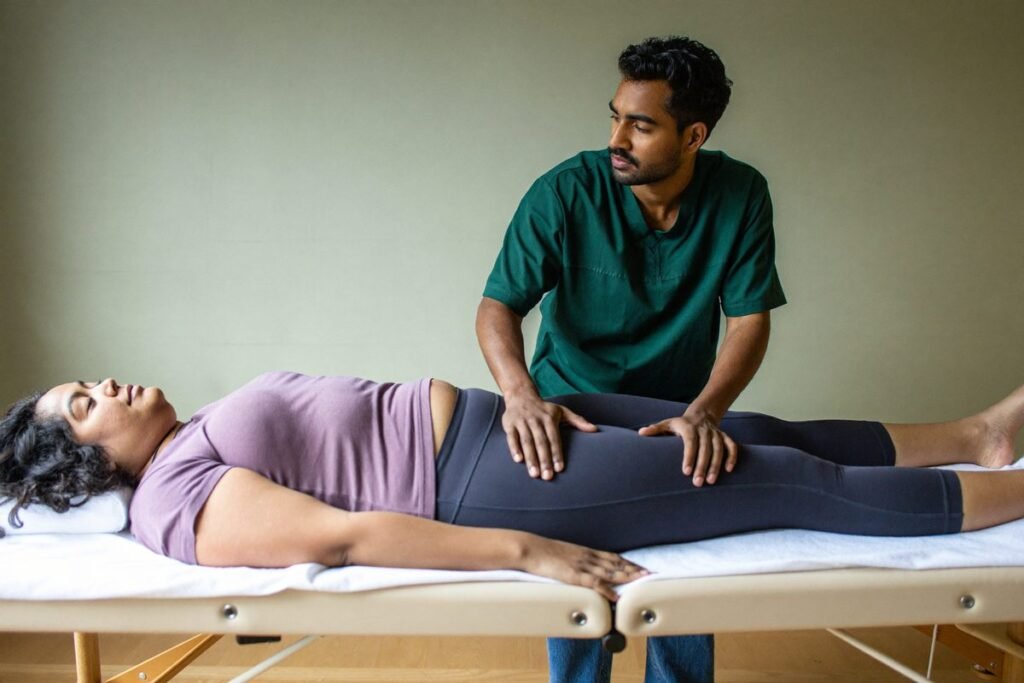
Manual lymphatic drainage uses much lighter pressure, a slower rhythm and a specific sequence compared with a regular massage. A relaxation or deep-tissue massage works on muscle and deeper soft tissue. Manual lymphatic drainage works on the fluid sitting just under the skin. They are different techniques with different aims, and one is not a stronger version of the other.
The pressure is the most obvious difference
Most people booking manual lymphatic drainage for the first time expect something firm. It is not. The contact is light enough that some people initially wonder whether anything is happening.
That lightness is deliberate. The vessels being targeted sit very close to the surface, so the technique works by gently stretching the skin rather than by pressing into muscle. Heavier pressure engages deeper tissue, which is a different aim.
If you have booked lymphatic drainage and it feels like a firm massage, it is worth asking what technique is being used.
The order matters as much as the pressure
This is the part most people have never heard.
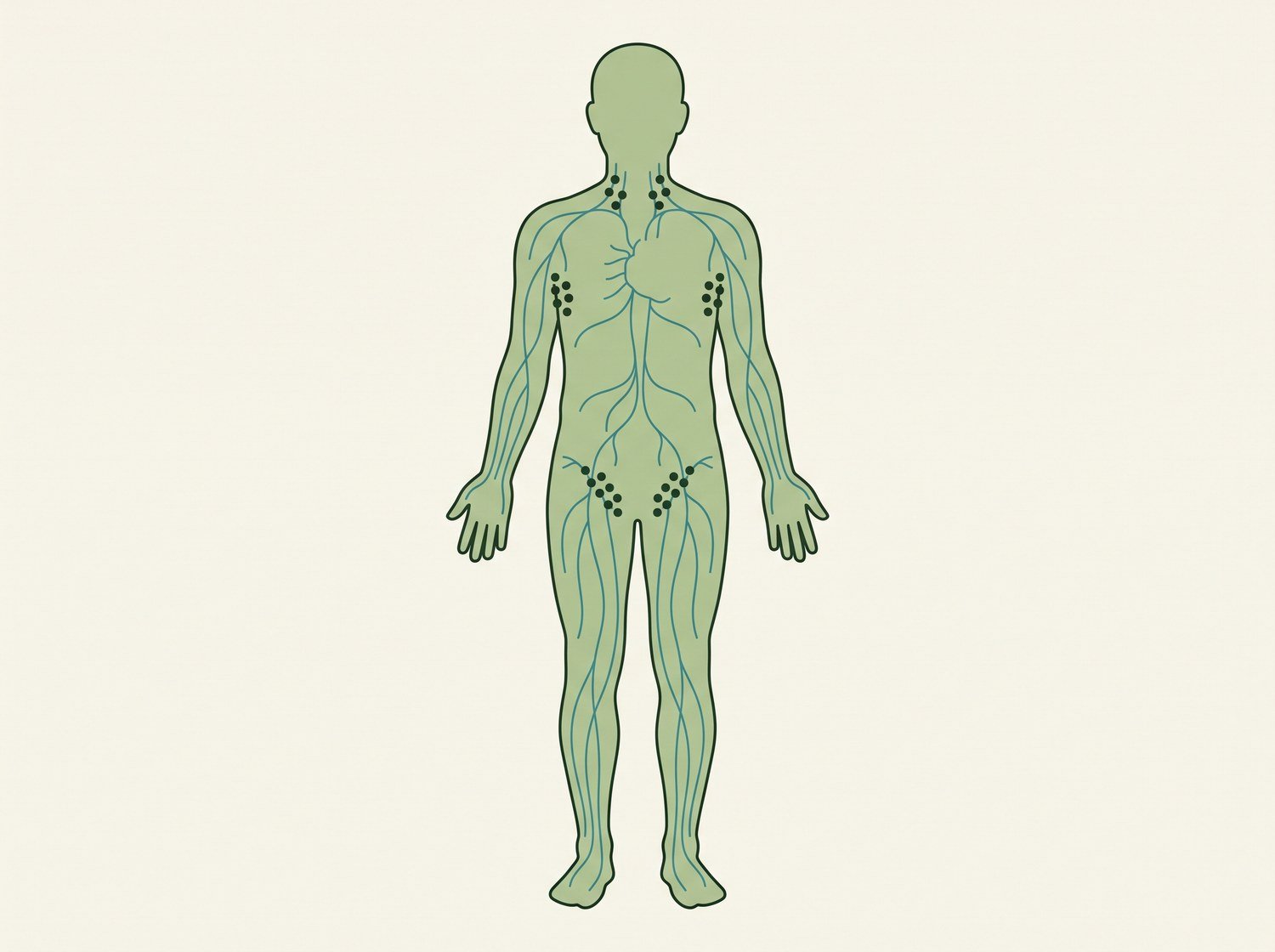
A session for a swollen leg often begins nowhere near the leg. The clinician may start at the neck or the abdomen, clearing the route before attempting to move fluid into it. Working on the swollen area first, without preparing the pathway, is less useful.
A regular massage has no equivalent requirement. A therapist can work on a tight shoulder without first preparing the neck.
A quick comparison
| Manual lymphatic drainage | Relaxation or deep-tissue massage | |
|---|---|---|
| Pressure | Very light, skin-level | Moderate to firm, into muscle |
| Rhythm | Slow, repetitive, rhythmic | Varies with technique |
| Sequence | Specific, usually clearing proximal areas first | Generally led by symptoms |
| Main target | Fluid in the tissues | Muscle and fascia |
| Typical use | Swelling after surgery, lymphedema, lipedema | Muscle tension, stiffness, general wellbeing |
| Training | Specific post-qualification training | Part of standard massage qualification |
So is a regular massage useless for swelling?
No, and it would be unfair to say so. Relaxation massage may feel good and has its place. It is not a substitute for decongestive treatment when the problem is a lymphatic one.
If you have diagnosed lymphedema, or you are recovering from surgery where a surgeon has given you specific instructions, the distinction matters. If you are simply tense and a bit puffy after a long flight, it matters much less.
What lymphatic drainage does not do
Worth being direct, because a great deal of marketing says otherwise.
It does not detoxify the body. Your liver and kidneys do that. It does not burn fat or cause weight loss. It does not remove cellulite. It does not cure lymphedema or lipedema.
Any change on the scale after a session reflects fluid, not fat.
How do I know which one I need?
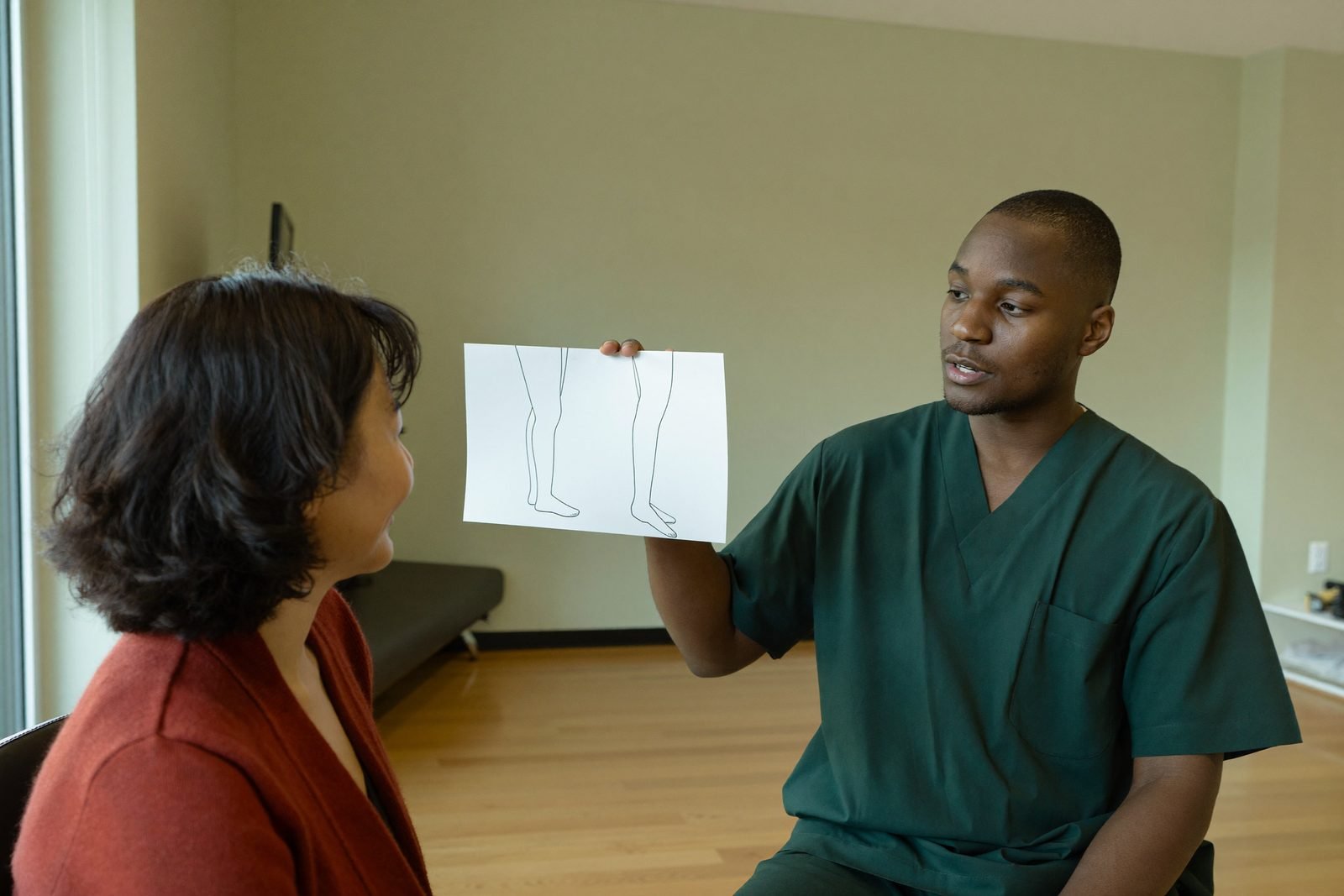
If you are managing diagnosed lymphedema, recovering from surgery with your surgeon’s clearance, or dealing with persistent one-sided swelling that has already been assessed, manual lymphatic drainage is the relevant technique.
If you want to feel less tense and more comfortable, a regular massage is a perfectly reasonable choice and often the better one.
If you have new swelling that nobody has looked at yet, neither is the right first step. That needs assessment first.
When to seek urgent care instead
Get urgent medical care, and do not book massage, if you have sudden swelling in one limb, chest pain or shortness of breath, coughing up blood, fever or feeling generally unwell, a limb rapidly becoming red, hot or painful, severe new pain, or a surgical wound that is opening or draining.
These can indicate a blood clot, a clot in the lung, cellulitis or a post-operative complication. Call Health Link at 811, or 911 if you are severely unwell.
Common questions
Is lymphatic drainage supposed to hurt? No. It should be comfortable throughout. Tell your clinician if anything is not.
Can I have both? Often yes, but not usually in the same session, and the order and timing should be discussed.
How do I check a clinic knows what they are doing? Ask what technique they were trained in and where. Ask how a session is structured. A clinic doing this properly will explain the sequencing without hesitating.
Sources
International Society of Lymphology 2023 Consensus Document. Canadian Cancer Society, Lymphedema.
CTA
If you are not sure which you need, book an assessment and we will tell you honestly, including if the answer is neither.
It is not a diagnosis or a treatment plan. If something here sounds like what you are dealing with, book an assessment and we will look at it properly.