
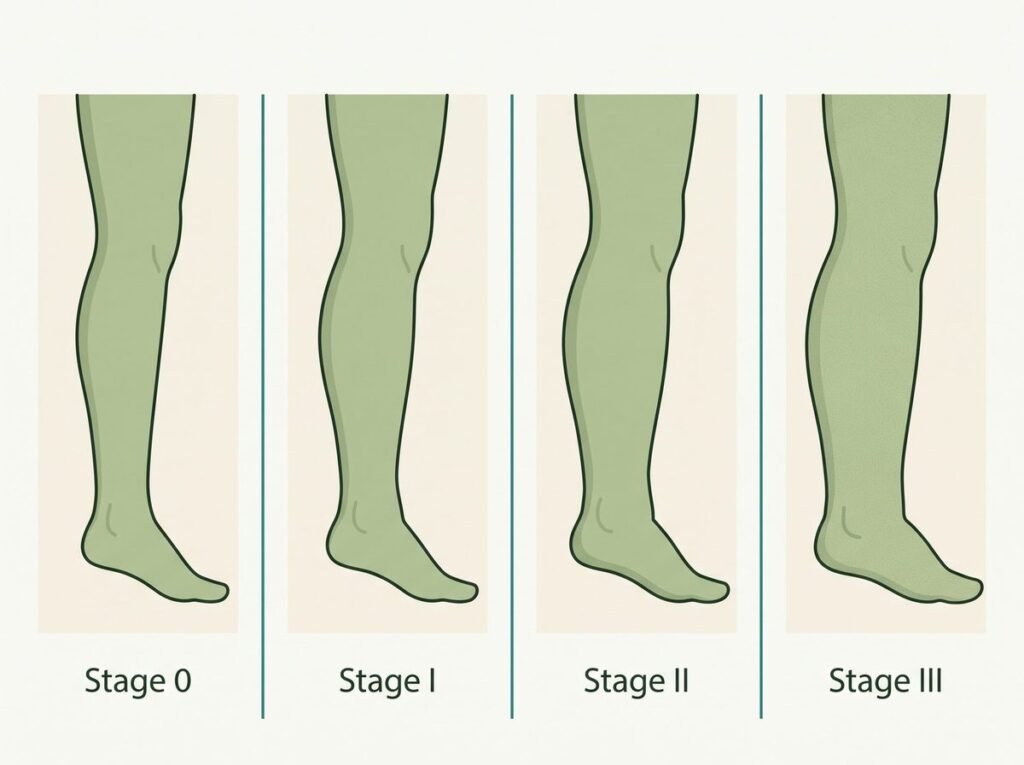
Lymphedema staging describes what the tissue is doing at a point in time. It runs from Stage 0, where the lymphatic system is impaired but no swelling is visible, through to Stage III, where swelling is long-standing and the skin and tissue have changed. A stage is a description, not a sentence, and it guides what treatment should focus on.
Why staging exists
Staging gives clinicians a shared language and helps decide where to put the effort. Someone at Stage I and someone at Stage III both need care, but the emphasis differs.
The most widely used framework comes from the International Society of Lymphology. Your clinician may also describe severity separately, based on how much larger the limb is.
The stages, plainly
| Stage | What is happening | What it usually feels like |
|---|---|---|
| Stage 0 | The lymphatic system is impaired but the swelling is not visible yet. Sometimes called latent | Heaviness, tightness, or a sleeve or ring fitting differently, with nothing obvious to see |
| Stage I | Swelling that reduces with elevation, often overnight. May pit when pressed | Puffiness that is better in the morning and worse by evening |
| Stage II | Swelling that no longer fully settles with elevation. Tissue begins to firm | Persistent swelling. Pressing may leave less of a dent than before, which is a tissue change, not an improvement |
| Stage III | Long-standing swelling with more pronounced skin and tissue change | Significant, established swelling with skin changes |
The counterintuitive part
At Stage I, pressing the swelling usually leaves a dent. As things progress, that dent can become harder to make.
People often read that as improvement. It usually is not. It reflects the tissue becoming firmer rather than the fluid resolving. This is one of the more common misunderstandings, and it is worth knowing so a change is not mistaken for progress.
Does a stage go up and never come down?
Not necessarily. Consistent management can improve the picture, particularly earlier on. What tends not to reverse fully is established tissue change, which is the main argument for starting sooner rather than waiting.
Stage 0 is worth taking seriously precisely because there is nothing to see. Symptoms without visible swelling are still worth assessing.
What staging changes about treatment
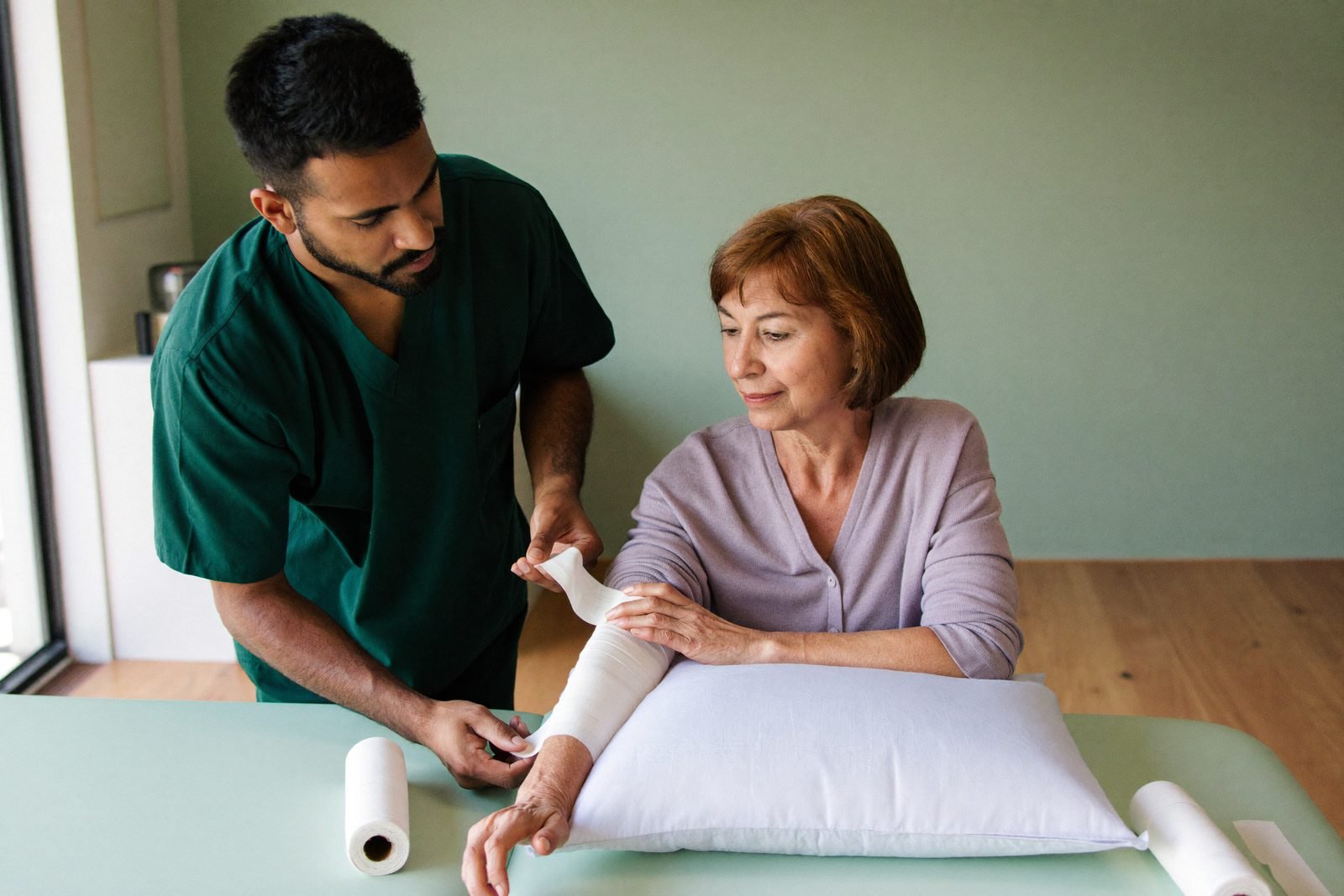
Earlier stages generally focus on compression, movement, skin care and education, with the aim of keeping things stable. Later stages more often involve an intensive reduction phase, sometimes with bandaging, before moving to maintenance.
In every stage, compression and movement do most of the work. Manual lymphatic drainage may be included for selected people. Results across studies are mixed, and where benefit has been shown it tends to appear with a longer course of treatment rather than a single session.
The thing that matters more than your stage
Skin care. Not as cosmetic advice, but because intact skin is the main defence against cellulitis, which is the most common serious complication of lymphedema and can escalate quickly.
Get urgent medical care the same day if a limb becomes red, hot, tender or more swollen than usual, or if you have fever, chills or feel generally unwell. Cellulitis usually needs antibiotics and the limb should not be massaged while an infection is active. Call Health Link at 811, or 911 if you are severely unwell.
Common questions
Can lymphedema be cured? No. It is managed, and management can work well. Many people stay stable for years.
Is a higher stage my fault? No. Progression depends on the cause, on how much lymphatic capacity was lost and on how early management started. Plenty of people do everything asked of them and still progress.
Can I be staged online or from a photo? No. Staging requires examination.
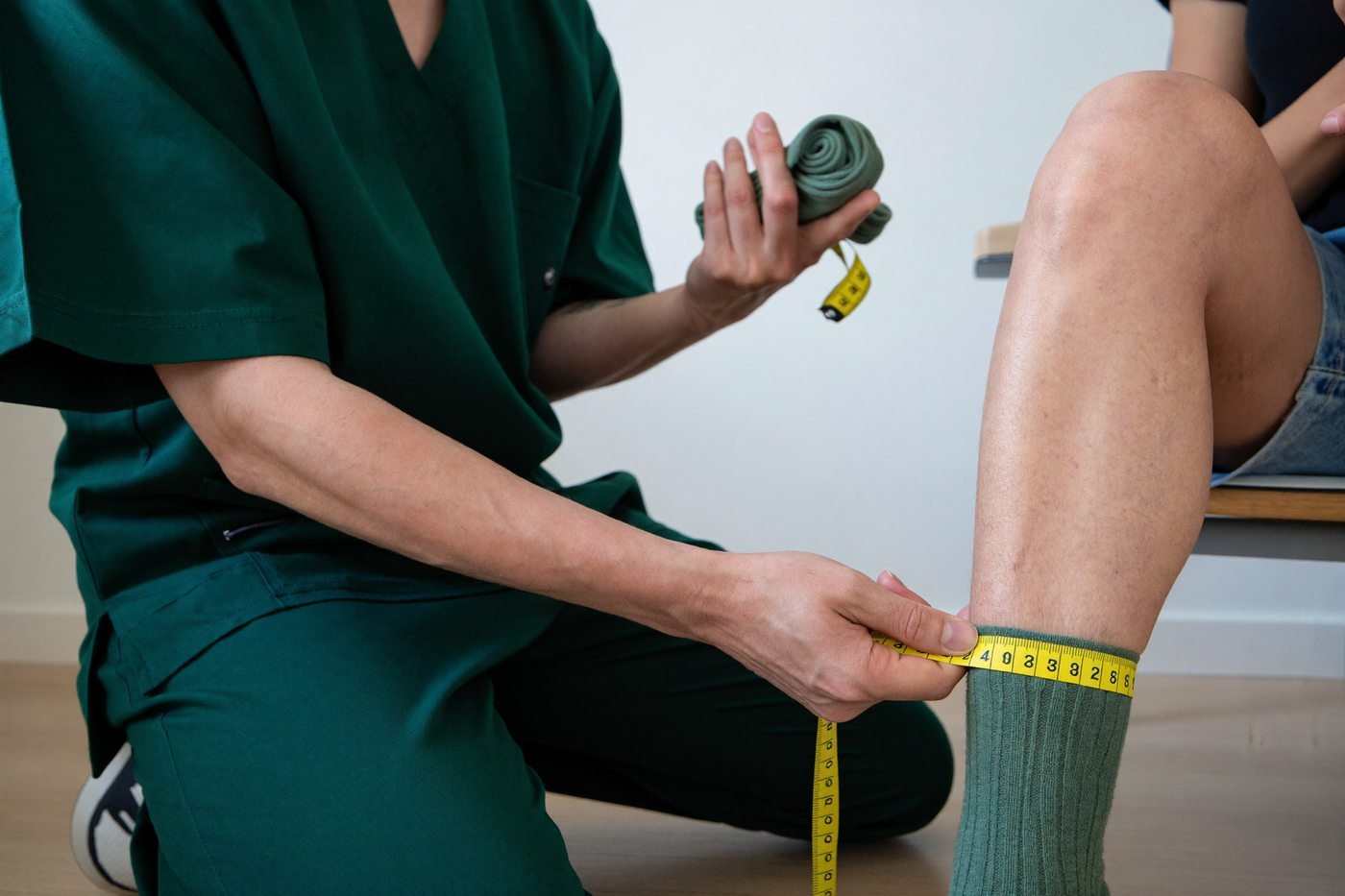
How is progress measured? Usually by limb measurement at intervals, plus how the limb feels and functions.
Sources
International Society of Lymphology 2023 Consensus Document. Complete Decongestive Therapy Phase 1 Expert Consensus, 2024. Canadian Cancer Society, Lymphedema. MyHealth Alberta.
CTA
If you have been given a stage and nobody explained it, book an assessment and we will walk you through what it means for you.
It is not a diagnosis or a treatment plan. If something here sounds like what you are dealing with, book an assessment and we will look at it properly.